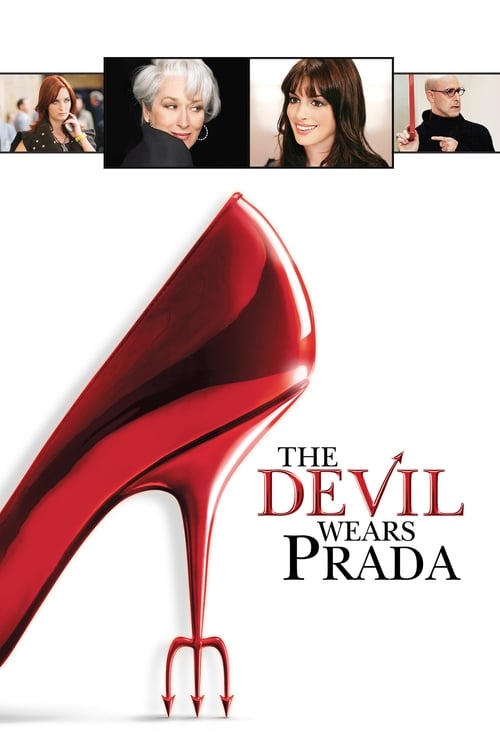
The Devil Wears Prada (2006)
The Shadow and Light of a Glamorous World
by 10days1movie · Published 2026-10-22
| Type | Movie |
|---|---|
| Director | David Frankel |
| Cast | Meryl Streep, Anne Hathaway, Emily Blunt, Stanley Tucci, Simon Baker, Adrian Grenier |
| Release | 2006 |
| Genre | Drama, Comedy |
| Runtime | 109min |
Can being recognized at work and not losing yourself coexist? The Devil Wears Prada poses this old question by borrowing the glamorous stage of a fashion magazine. On the surface it looks like a light comedy awash in chic outfits and luxury goods, but what the film truly examines is the price of ambition. It is the story of what one gains and what one sets down when a young professional sets foot in her dream job.
What it’s about — The things a dream job takes away
Andy (Anne Hathaway), who dreamed of becoming a journalist, is by chance hired as assistant to Miranda (Meryl Streep), editor-in-chief of the world’s top fashion magazine. Ignorant of fashion and indifferent to how she dresses, Andy has to hold out under harsh instructions raining down by the minute and a cold gaze. Floundering clumsily at first, she gradually handles the work with skill and changes to match that world even in her looks and manner. But the more she is recognized, the further she drifts from her boyfriend and friends, and from her original self. The film calmly follows the sense of loss that grows the closer Andy comes to the summit.

Direction — A narrative of change drawn through the evolution of clothing
David Frankel does not stop at showing off the air of the fashion world. The glamorous clothes and the streets of New York certainly please the eye, but what the camera truly attends to is the expressions of the people working behind that glamour. The director takes the clever approach of showing Andy’s change through the evolution of her clothing. The very process of moving from a frumpy sweater toward an increasingly chic wardrobe stands in for the narrative of her being absorbed into this world. While capturing the breathless rhythm of the magazine with rapid editing and brisk music, he also knows how to slow the pace at the important emotional moments.
That said, Andy’s choice and the ending in the second half feel somewhat tidied. The conflicts that would tangle far more intricately in a real workplace are tied up relatively cleanly by the film. Even so, the resonance that conclusion offers is not small, because the preceding process is built up persuasively enough.
Performance — Meryl Streep freezing the room without raising her voice
It is no exaggeration to say this film belongs to Meryl Streep. She freezes the air of a room without raising her voice. Rather than drawing Miranda as a simple villain, she renders her dimensionally as an object of fear yet somehow a lonely person. The moment of human fracture that briefly surfaces in the second half is a scene that would have been hard to pull off without Streep. Anne Hathaway carries the process of change naturally, moving without strain from naivety to chic sophistication and on to the stage of looking back at herself. Emily Blunt and Stanley Tucci leave a clear impression despite small roles, adding grain to the film.

What the film says — Growth or corruption, and who decides
The Devil Wears Prada neither mocks fashion nor blindly admires it. The question the film poses is more fundamental. The deeper we sink into a kind of work, the more we are stained by that work’s values, and who decides whether that change is growth or corruption? Andy’s choice is closer to one stance than a right answer. Without declaring her leaving to be correct, the film does clearly mark the importance of asking oneself what one truly wants. So this film touches a worry anyone who has held a job has likely faced at least once.
Ratings & reception
The IMDb rating is 7.0 out of 10. The Rotten Tomatoes freshness score is 75 percent, drawing critical praise, with Meryl Streep’s performance in particular earning near-unanimous acclaim. The Metacritic score is 62 out of 100. The balance of handling light material while not losing sight of the characters’ inner lives was the basis of its good reception. That it is steadily revisited not only at the time of release but well afterward shows this film’s vitality.

Verdict
It is a film that hides a weighty question inside a glamorous exterior. You can enjoy it lightly as a fashion comedy, but to anyone who has pondered the balance of work and life it lands unexpectedly deep. Meryl Streep’s overwhelming presence alone makes it worth watching, and a solid story is added on top. The slickly tidied ending is a slight pity, but not enough to make four stars hesitate.
Recommended for
- Those who have wrestled between recognition and selfhood at work
- Those who want to see Meryl Streep’s restrained, brilliant performance
- Those who want both glamorous spectacle and a serious theme together
Comments