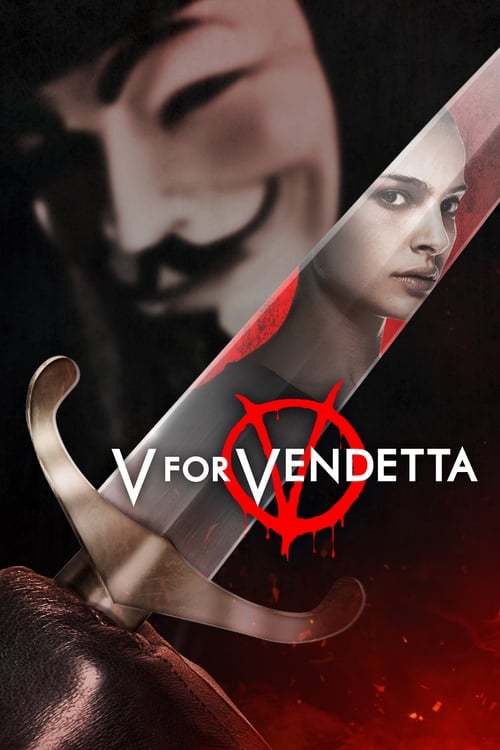
V for Vendetta (2005)
What Remains Behind the Mask Is an Idea
by 10days1movie · Published 2026-11-03
| Type | Movie |
|---|---|
| Director | James McTeigue |
| Cast | Natalie Portman, Hugo Weaving, Stephen Rea, Stephen Fry, John Hurt, Tim Pigott-Smith |
| Release | 2005 |
| Genre | Action, Thriller, Science Fiction |
| Runtime | 132min |
When the film was released, surely no one could have predicted that a single white, smiling mask would come to symbolize the resistance of an era. Through the story of one masked figure who stands against a totalitarian state, V for Vendetta asks about a society ruled by fear and the power of the idea that breaks it. It is a work that holds a weighty political question beyond its dazzling action.
What it’s about — A masked man wakes the sleeping citizens
The near-future Britain lies in the grip of a dictatorial regime that governs its people through fear. Evey (Natalie Portman), wandering the night streets after breaking curfew, is rescued from the verge of capture by the secret police by a masked, mysterious figure called V (Hugo Weaving). Carrying a past destroyed by the regime, V declares that he will blow up the Houses of Parliament one year later. He aims not at simple revenge but at waking the sleeping citizens. Swept into that journey, Evey learns how to move beyond fear, and the film depicts the awakening of one individual and the uprising of a society side by side.
Direction — When the action stops, the power of word and letter
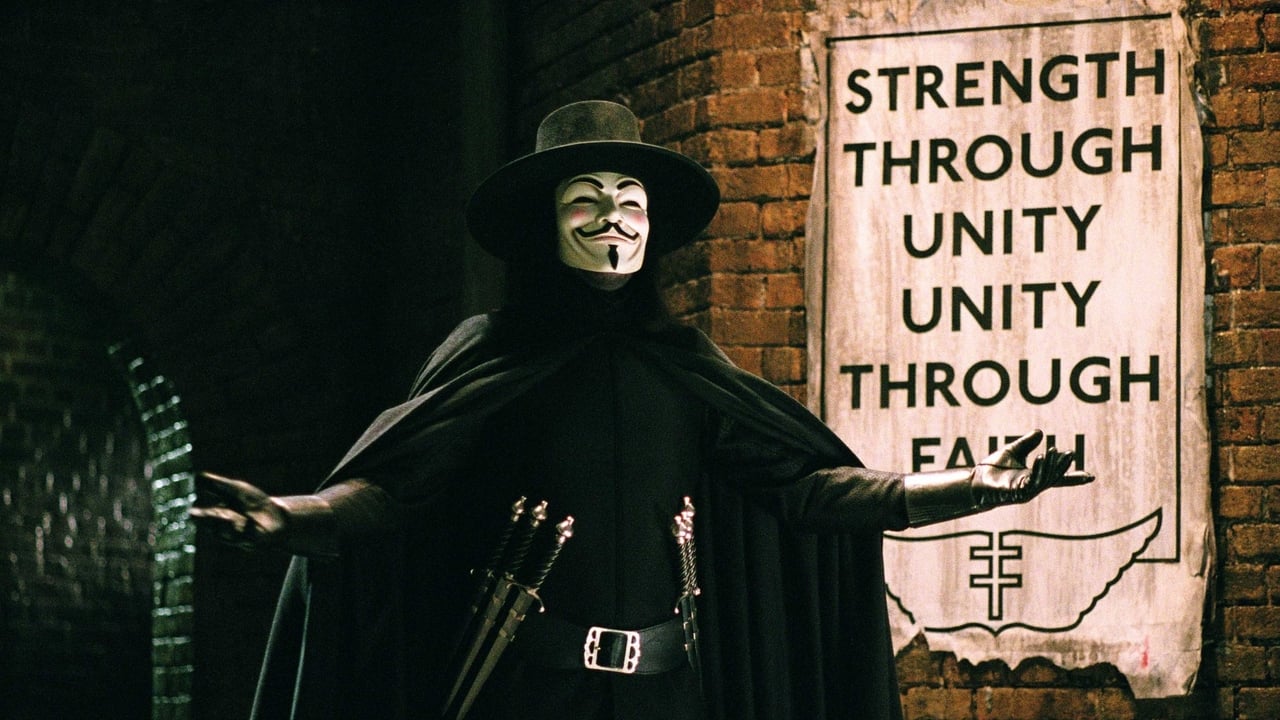
James McTeigue’s direction aims for a balance between dazzling spectacle and political message. The action scenes of V wielding knives are stylized with motion blur, almost like a painting. The spectacle of explosions and uprising is intense too. But this film’s real power lies in the moments the action stops. Scenes like V’s speech ringing out across the nation over the radio, or the reading aloud of a letter one woman left behind in a prison, show how word and letter can move the human heart. That said, the way the film organizes the complex political grain of the source comic into a somewhat simple good-versus-evil structure leaves a lingering regret. Even so, the power of the direction to convey the core message clearly is undeniable.
Performance — A character brought to life by voice with the face hidden
Hugo Weaving acts with his face hidden the entire film. Under the condition of being unable to use expression at all, he breathes life into the character of V through voice and gesture alone. His elegant register, restrained movement, and the anger and sorrow conveyed from beyond the mask make the character vividly alive even though his face is unseen. This is no easy achievement. Natalie Portman delicately renders Evey transforming from a fear-stricken citizen into a human being who has overcome fear. The change she shows in the late prison scene in particular forms the film’s emotional peak. The Inspector Finch played by Stephen Rea, a figure who follows the truth and gradually comes to doubt the system, adds balance to the story.

What the film says — You can kill a man, but not an idea
The core of V for Vendetta is the belief that an idea does not die. You can kill one person, but the thought he leaves behind spreads to countless others who don masks. The film’s final scene, of a crowd wearing identical masks filling the streets, condenses that message into a powerful image. At the same time, the work offers no easy answer about the legitimacy of meeting violence with violence. It is a film that makes you mull over how fear comes to rule a society, and what the first step in breaking it might be. The way a regime spreads fear to maintain power, and seizes the press and information to obscure the truth, looks anything but unfamiliar even now. And so this work gains a sharper sense of reality the more time passes.
Ratings & reception
This work has been steadily reappraised and beloved since its release. Its IMDb rating is a high 8.1, its Rotten Tomatoes freshness is 73 percent, and its Metacritic score is 62. Critics were generally favorable toward the stylized action and political message, though there were also criticisms that it simplified the complexity of the source. The mask in the film was later used as a symbol in various real-world resistance movements, extending the work’s influence beyond the screen.

Verdict
V for Vendetta is a political fable in the clothing of an entertainment film. Its good-and-evil structure is somewhat stark and some of its messages are blunt, but the audacity of confronting head-on the power of an idea and the nature of fear does not lose its shine with time. To this solid work that leaves something to think about, four stars is plenty.
Recommended for
- Viewers who love dystopian films with a clear message
- Those who want stylized action and weighty themes together
- Anyone who wants to see the craft of bringing a character to life through acting beyond the mask
Comments