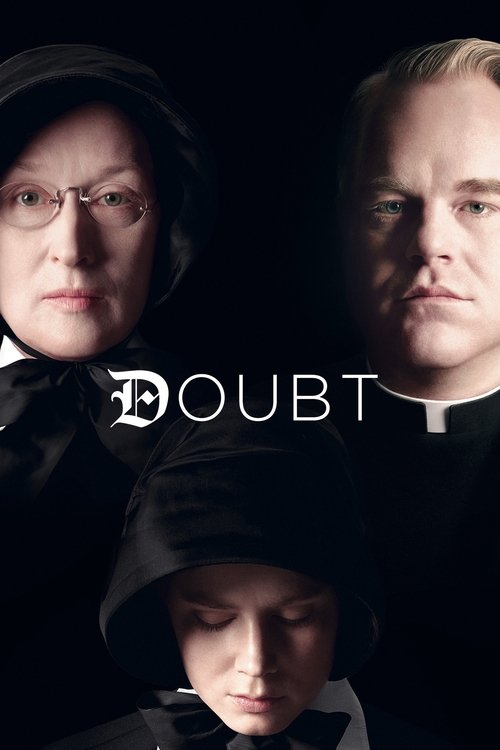
Doubt (2008)
The Smell of Power Exercised from a Place of Uncertainty
by 10days1movie · Published 2026-08-10
| Type | Movie |
|---|---|
| Director | John Patrick Shanley |
| Cast | Meryl Streep, Philip Seymour Hoffman, Amy Adams, Viola Davis |
| Release | 2008 |
| Genre | Drama |
| Runtime | 104min |
Certainty is sometimes more powerful than evidence. John Patrick Shanley’s Doubt is set in a 1960s Catholic school and tells the story of a principal nun pushing a groundless suspicion against a priest. Like its title, this film gives no answers. My rating is ★4.0.
What it’s about — a principal nun pushing a groundless suspicion
1964, Bronx, New York, at a Catholic school. Principal Sister Aloysius (Meryl Streep) develops a suspicion that Father Flynn (Philip Seymour Hoffman) has had an inappropriate relationship with the school’s first Black student. There is no evidence. But Sister Aloysius’s certainty does not waver. Young, obedient Sister James (Amy Adams) is torn between the two. Originally a successful Broadway play, the film was adapted by Shanley himself.
Direction — tilted frames and the tension of silence
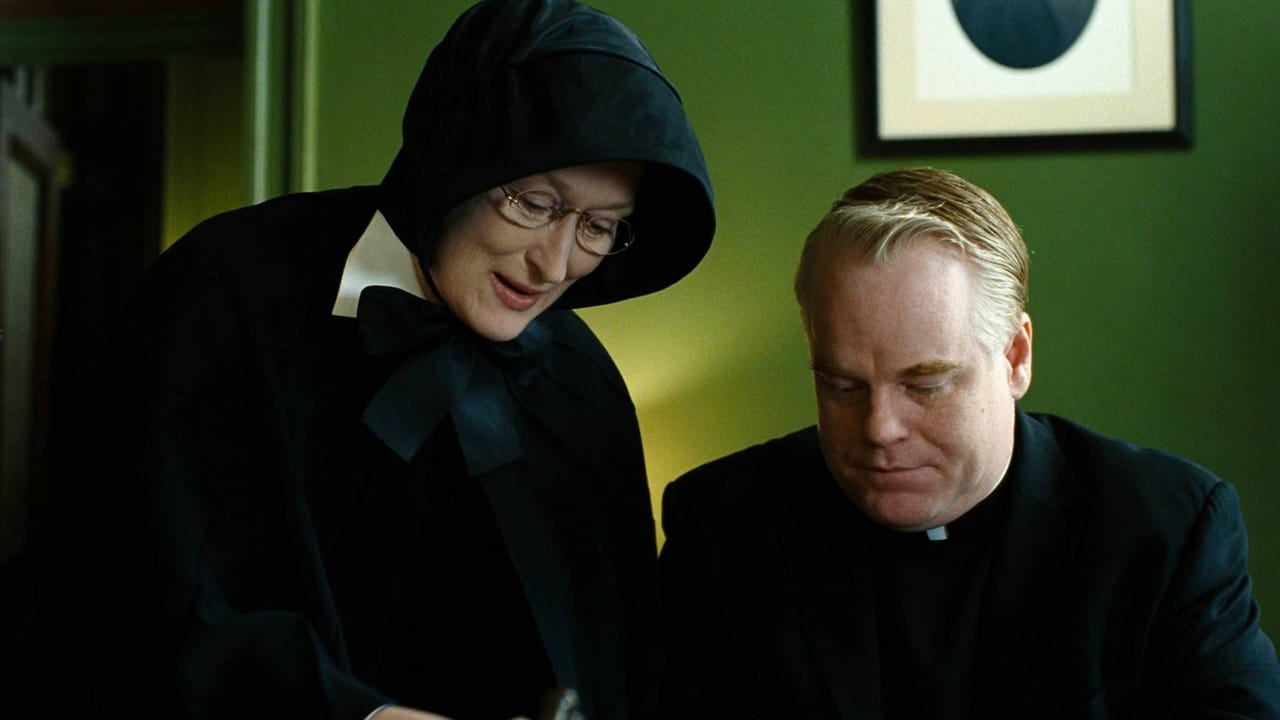
Shanley, a playwright-turned-director, chose a dialogue-centred approach. The camera closely follows the actors’ faces to catch the flow of power hidden behind words. In key scenes, the screen is shot at a subtly tilted angle. This tilt is an intentional choice to visualise the characters’ moral imbalance. The office scene where Sister Aloysius and Father Flynn first face each other is one of the film’s most tension-filled sequences, with the two actors advancing each line of dialogue like a chess match. Music is used minimally; instead, the texture of silence and dialogue creates the tension.
Performance — all four actors Academy nominees
The fact that all four actors earned Academy Award nominations speaks to the level of acting in this film. Meryl Streep reveals the emotions beneath Aloysius’s cold exterior in a controlled way. Philip Seymour Hoffman perfectly embodies Father Flynn in a way that is readable as both reasonable and guilty. Viola Davis appears in just one scene as the boy’s mother, but she creates the film’s most shocking moment.
What the film says — the moment certainty becomes power
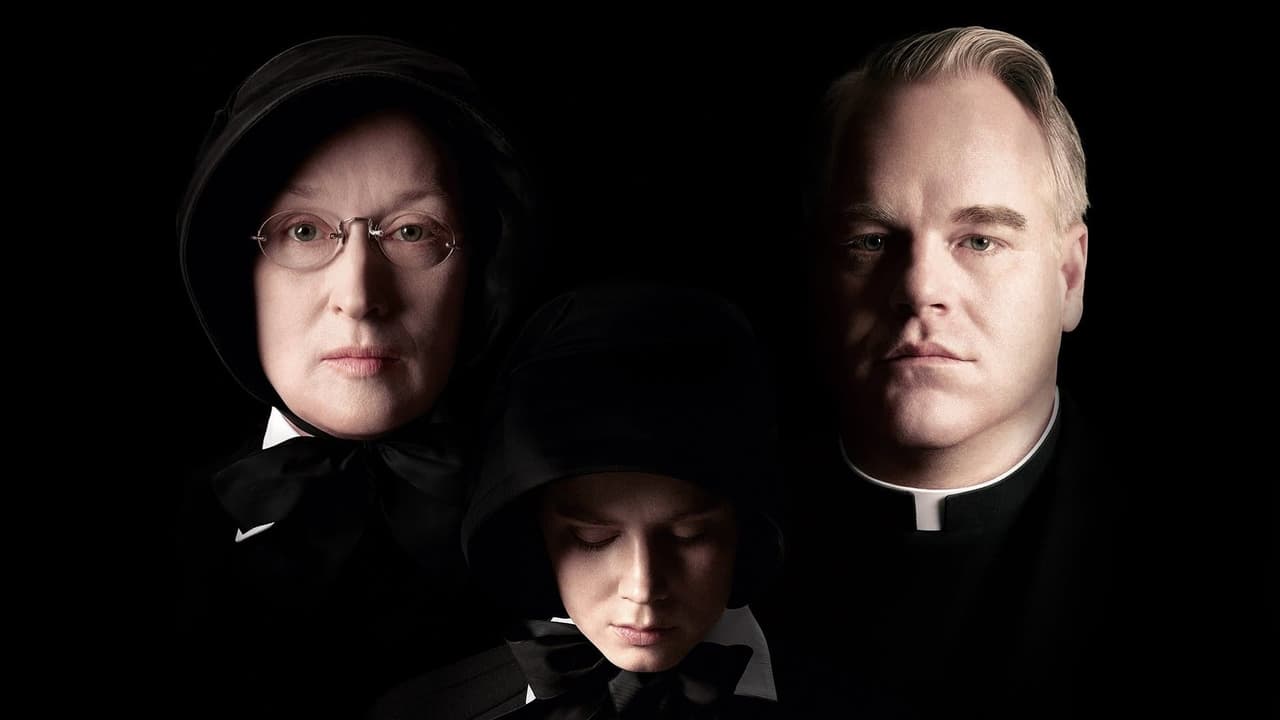
On the surface this film addresses an allegation of clerical sexual abuse, but it is actually about the ethics of certainty. How does certainty without evidence become power? Sister Aloysius may be right, or she may be wrong. That ambiguity runs throughout the entire film. The single line Sister Aloysius delivers in the final scene makes clearly visible that this film was never a simple villain-versus-justice scenario. The film leaves that judgment to the audience. Viewed with the awareness that clerical sex abuse in the Catholic Church is already publicly known, more complex emotions arise — and that is precisely why a film made in 2008 remains valid to this day.
Ratings & reception
TMDB score: 7.2. IMDb score: 7.5. Rotten Tomatoes freshness: 79%. It received five Academy Award nominations including Best Picture, Best Director, Best Actress (Streep), Best Supporting Actor (Hoffman), and Best Supporting Actress (Adams and Davis). It won no major awards but received consistent critical praise for the acting.
Weaknesses
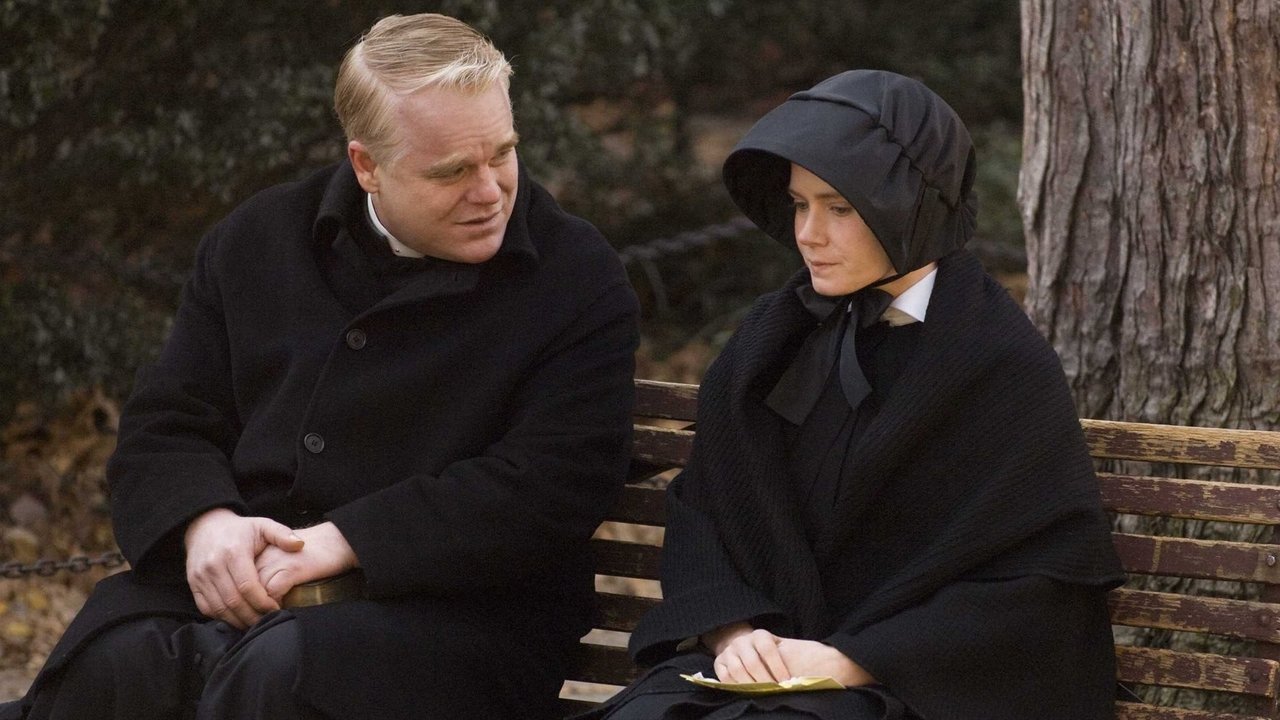
The theatrical structure can feel somewhat closed as it transitions to film. Limited spatial variety and tension concentrated in dialogue scenes may bore some viewers. Part of the reason Viola Davis’s scene is so intense is precisely its contrast with the static energy of everything else.
Verdict
Doubt is a work that succeeds in bringing the high-density dialogue and acting of its stage original to the screen. The fact that it gives no answers is not a shortcoming — it is the film’s core. If Sister Aloysius is right, does her cold-blooded approach get justified? If she is wrong, who bears responsibility for the certainty that destroyed a person’s life? These questions follow you after the film ends. The Meryl Streep vs. Philip Seymour Hoffman face-off alone makes it well worth watching, and the fact that a film of this character received four simultaneous Oscar nominations speaks to its quality.
Recommended for
- Those who enjoy dialogue-centred psychological dramas
- Those who appreciate Meryl Streep’s acting
- Those who enjoy stories with no morally clear answer
Comments