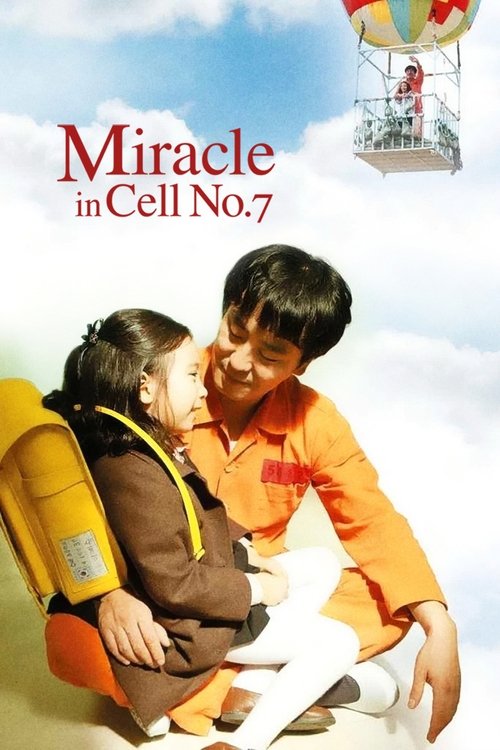
Miracle in Cell No. 7 (2013)
A Father-Daughter Love Blooming in Prison
by 10days1movie · Published 2026-10-04
| Type | Movie |
|---|---|
| Director | Lee Hwan-kyung |
| Cast | Ryu Seung-ryong, Park Shin-hye, Kal So-won, Jung Jin-young, Oh Dal-su, Park Won-sang |
| Release | 2013 |
| Genre | Drama, Comedy |
| Runtime | 127min |
A father with an intellectual disability and a clever daughter who takes after him. And the unjust frame-up and the prison setting that pull the two apart. Miracle in Cell No. 7 is, by anyone’s measure, a film made with the deliberate intent to draw tears. Setups designed to tug at the emotions are laid throughout, and it isn’t hard to guess where the ending is headed. Even so, there is a clear reason this work moved the hearts of more than twelve million viewers.
What it’s about — A wrongly accused father and the conspiracy of Cell No. 7
Yong-gu is a father with the heart of a young child. To him, his daughter Ye-seung is the most precious thing in the world. One day Yong-gu is caught up in an incident over a bag the child wanted, framed for murder, and locked up in prison without even a proper defense. The cellmates of Cell No. 7, where he is held, are wary of him at first, but they open their hearts to Yong-gu’s innocence and hatch a plan to secretly bring his daughter Ye-seung inside the prison. The film depicts both this warm conspiracy and the sorrowful fate that awaits at its end.

Direction — Widening the gap between laughter and tears
Director Lee Hwan-kyung’s strategy is clear. In the first half he makes the audience laugh with the warm comedy created by Yong-gu and his cellmates, and in the second half he draws out tears with a tragedy that overturns that laughter entirely. It’s a method of amplifying emotion by widening the gap between laughter and tears as much as possible. This construction, in that it directly targets the emotions, can divide opinion. Yet because the comedy stretches are sufficiently enjoyable and the characters are drawn lovingly, the sorrow of the second half doesn’t feel forced.
The film makes the choice to ease the weight of reality appropriately. It does not paint the prison space as excessively dark but wraps it in a fairy-tale atmosphere. Thanks to this, even while handling tragic subject matter, the film as a whole dwells in warmth rather than cruelty. It’s a point open to criticism for being somewhat unrealistic, but for the emotion this film intended, it was an effective choice.
Performance — Ryu Seung-ryong’s fatherhood, free of caricature
It’s no exaggeration to say Ryu Seung-ryong’s performance is nearly everything in this film. In playing Yong-gu, a man with an intellectual disability, he never falls into exaggeration or caricature, while conveying his pure love for his daughter all the more intensely. It’s impressive how he brings a character that could easily become uncomfortable to life with warmth and conviction. Kal So-won, who plays the young Ye-seung, is another discovery. She expresses the heart of a clever child who deeply loves her father with a composure beyond her years. The father-daughter chemistry the two create is the very heart of this film. Supporting players including Oh Dal-su and Park Won-sang, who play the Cell No. 7 inmates, add laughter and affection in equal measure.

What the film says — A gaze toward the weak and solidarity
Miracle in Cell No. 7 looks like a simple tearjerker, but beneath it lies a questioning of society’s gaze toward the weak. Yong-gu’s situation, framed because he can’t receive a proper defense and lacks even the ability to defend himself, shows how powerless the weak are before the system. Yet what the film never lets go of is not anger but love. The solidarity that cellmates with not a drop of shared blood show for Yong-gu and Ye-seung, and the heart the father and daughter guard to the end, ultimately leave the audience with faith in people.
Ratings and reception
The IMDb rating is 8.1 out of 10, quite high. Domestically it drew more than twelve million viewers, recorded as one of the top box-office hits of the year, and won universal sympathy to the point of being remade in several countries since. That said, opinions split over its development that directly draws out emotion, with praise alongside criticism of it as melodrama. Even so, the actors’ fine performances and the warm message underpinned this work’s broad love.

Verdict
Miracle in Cell No. 7 is a film that knows exactly what it sets out to be and achieves that goal precisely. It’s a film that makes you cry in the end even though you know it’s aiming for your tears, and a film whose tears you needn’t feel ashamed of. Because the father-daughter love crafted by Ryu Seung-ryong and Kal So-won comes across so truly, I find myself sending it four stars beyond the limit of its familiar melodrama.
Recommended for
- Those looking for a family drama they can cry to with abandon
- Those who like films completed by actors’ heartfelt performances
- Those who want a warm story with both laughter and tears
Comments