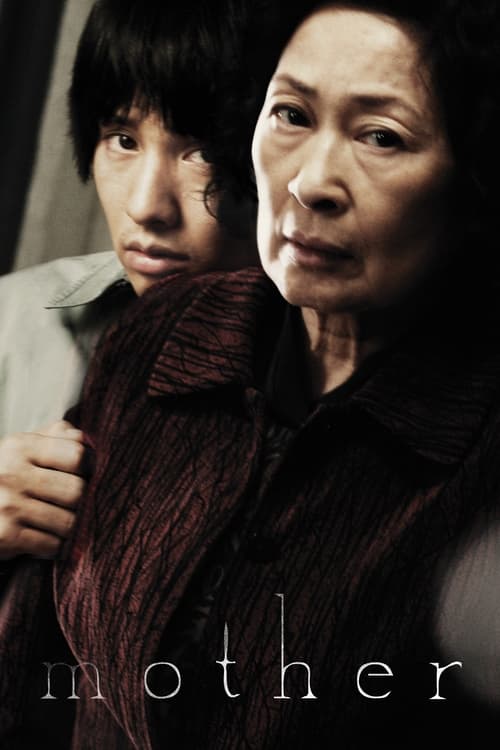
Mother (2009)
The Deepest Darkness Called Maternal Love
by 10days1movie · Published 2026-10-05
| Type | Movie |
|---|---|
| Director | Bong Joon-ho |
| Cast | Kim Hye-ja, Won Bin, Jin Goo, Yoon Je-moon, Jeon Mi-seon |
| Release | 2009 |
| Genre | Crime, Drama, Mystery |
| Runtime | 128min |
The sentence “a mother protects her child” is so familiar that it goes unquestioned. Bong Joon-ho’s Mother sees where that sentence leads if you push it all the way. From the moment a woman, not even given a name, resolves to do anything for her slow-witted son, the film slowly peels away the outer shell of a warm family drama. And what remains at the end is something too chilling to call love.
What it’s about — A mother’s pursuit of her son’s innocence
A mother who runs an herbal shop in a small town and gives acupuncture without a license lives alone with her twenty-eight-year-old son, Do-joon. Do-joon is somehow lacking, and so can hardly get through a day intact without his mother’s care. One day a local high school girl is found dead, and after a sloppy investigation Do-joon is named as the culprit. Both the police and the lawyer only want to bury the case quickly. Believing in her son’s innocence, or rather because she must believe it, the mother begins to dig out the truth herself. On its plot alone it’s one mother’s desperate pursuit, but what the film truly asks lies elsewhere: whether that belief is really aimed at the truth, or a shield made by a heart that cannot bear the truth.
Direction — The screen grows uneasy at the moment of relief
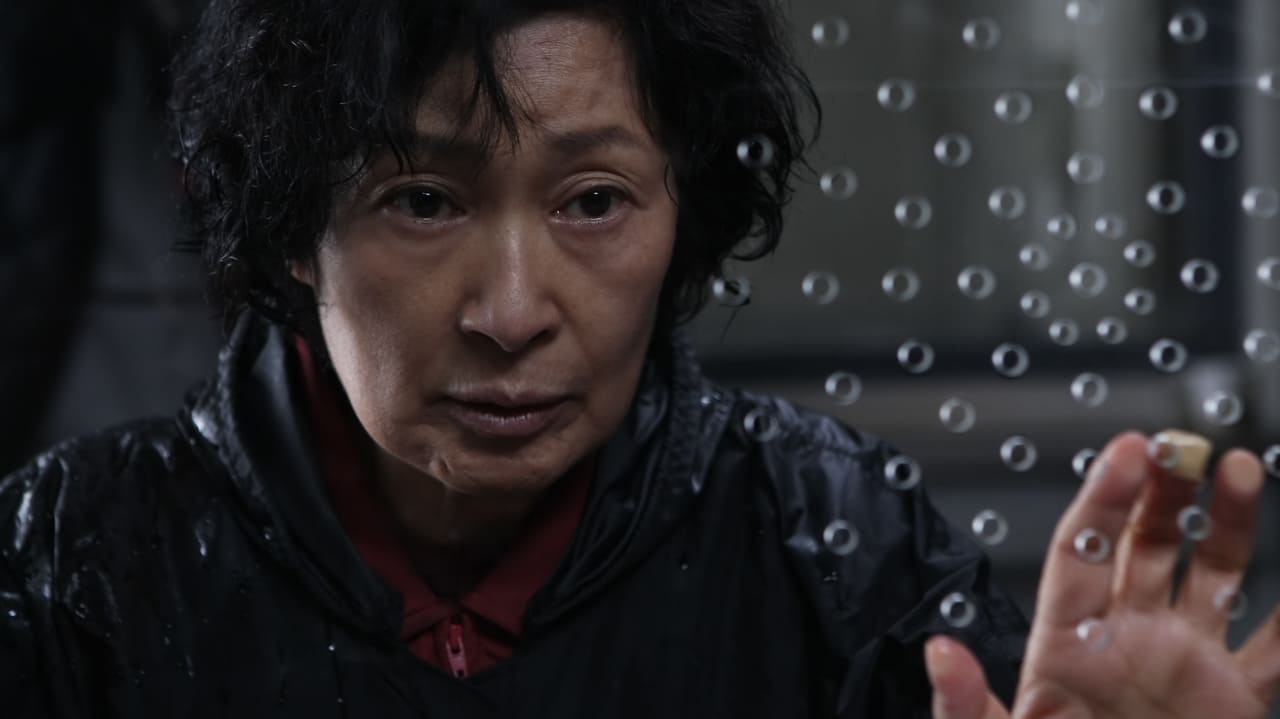
Bong Joon-ho is a director skilled at twisting genre to reveal a character’s interior. In Mother too he borrows the form of a mystery, but rather than the pleasure of following clues, he lingers longer on what the mother sees and what she averts her eyes from in the process. The camera often presses close to the mother’s face, never missing the moments when she feels relief or crumbles.
What’s especially striking is the way he handles light and space. As the case deepens, the screen grows steadily narrower and darker; conversely, the closer the mother draws to the truth, the more the field of view opens up. The temperature of the screen moves in reverse, so that the viewer grows uneasy precisely at the moment they should feel relief. The mother’s dance scenes that frame the film’s beginning and end are themselves a thematic declaration. Without a single line of dialogue, they show that some memories can be endured only by shaking the body to throw them off.
Performance — Kim Hye-ja shattering her national-mother image
This is Kim Hye-ja’s film. An actor long called the nation’s mother shatters that image herself and brings out an entirely different face. The swing of being utterly powerless before her child yet transforming like a beast before a threat is contained naturally within one person. The scenes where she moves between maternal love and madness with a single look are, without exaggeration, one peak of acting that Korean cinema has shown.
Won Bin fills the difficult role of Do-joon with an unexpected grain. Without exaggerating the dim-wittedness, he makes the audience flinch with a chilling expression at certain moments. The more harmless he seems, the greater the film’s tension. Supporting players including Jin Goo realistically fill the stale air of a rural town, making the mother’s isolation all the more vivid.

What the film says — Love and concealment are a paper’s width apart
Mother does not glorify maternal love. Rather, it follows to the very end how far that unconditional love can drag a person, and says that love and obsession, protection and concealment, may in fact be a paper’s width apart. The closer the mother draws to the truth, the more the film delivers not catharsis but a leaden ache. A structure that seemed clear about who should be condemned begins to waver, and the audience comes to re-examine the true nature of the heart they were cheering for. That final choice of giving acupuncture in order to forget is a chilling answer to how human beings live while bearing guilt.
Ratings and reception
Mother received even critical support. The IMDb rating is a stable 7.7 out of 10, and the Rotten Tomatoes freshness reaches 96 percent. The Metacritic score is also high at 79 out of 100. Invited to the Un Certain Regard section of the Cannes Film Festival, it drew attention abroad early, and Kim Hye-ja’s performance was widely praised at domestic and international award ceremonies. It is counted as one of the works where Bong Joon-ho’s signature genre-twisting and his gaze toward society are most concentrated.

Verdict
Mother is a film whose ending’s meaning you chew over for a long time after a single viewing. It depicts, through gaze rather than blame, how the safest word of all, love, can become the most dangerous weapon. Owing to its somewhat heavy emotion and the chill of its second half, it isn’t a film easy for everyone, but in that direction and acting interlock without the slightest gap, that weight is more than worth it. The rating is ★4.0. In Bong Joon-ho’s filmography, you meet one of its darkest and longest-lingering faces.
Recommended for
- Those who like films that dig deep into human psychology under the guise of genre
- Those who want to feel the power of carrying an entire film on acting alone
- Those who want to confirm the root of Bong Joon-ho’s worldview after seeing his other works
Comments