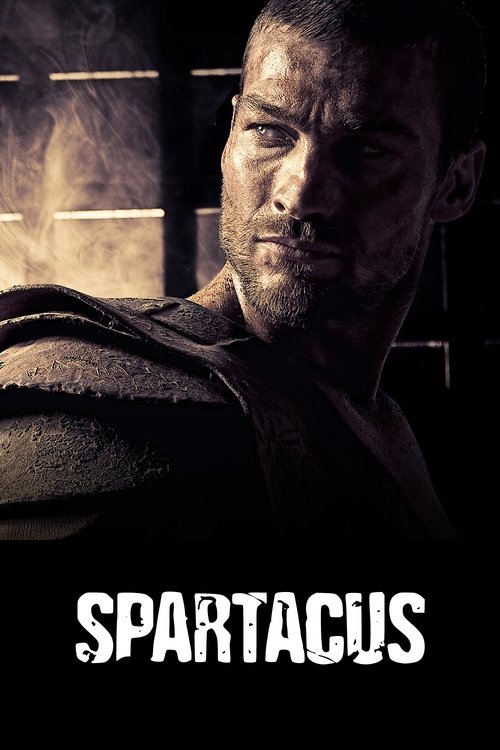
Spartacus: War of the Damned (2013)
The Solemnity of the Final Battle for Freedom
by 10days1movie · Published 2026-08-06
| Type | Series |
|---|---|
| Director | Steven S. DeKnight |
| Cast | Liam McIntyre, Manu Bennett, Cynthia Addai-Robinson |
| Release | 2013 |
| Genre | Drama, Action, History |
| Runtime | 53min |
Spartacus 3: War of the Damned is the conclusion of this entire series. Beginning with Blood and Sand in Season 1 and continuing through Season 2’s Vengeance, the story wraps up in the final ten episodes. How the historical revolt of Spartacus ends is already known, and the challenge of this season was how to portray the journey toward that ending. My rating is ★4.0. It is a solemn and honest finale.
What it’s about — A finale headed toward a fixed ending
Spartacus is a historical drama set in ancient Rome, airing on Starz. It is based on the real events of the Third Servile War of 73–71 BC, in which the gladiator slave Spartacus led a rebellion against Rome. War of the Damned began airing on 25 January 2013 and consists of 10 episodes. Liam McIntyre played Spartacus and Manu Bennett played Crixus.

Direction — A blood-soaked aesthetic expanded to the battlefield
This season opens with the rebels holding real power for the first time — occupying a Roman city. From the narrow ludus of Season 1, the theatre of war has now expanded to the entire Italian peninsula. Large-scale battle scenes express the series’ signature blood-drenched, exaggerated aesthetic to its maximum. This divisive visual style has its final and unreserved moment in this season. The strategic confrontation with Crassus creates tension beyond the action sequences.
Performance & characters — The clash of Spartacus and Crixus
Liam McIntyre inherited a difficult position after Andy Whitfield, but in this season he has made the character of Spartacus entirely his own. He humanly portrays a leader in conflict between an obsession with freedom and the inevitable outcome of war. Manu Bennett’s Crixus is a character who pursues freedom in a different way from Spartacus, and the conflict between the two is the emotional core of this season.

What the work says — How to remember the story of the defeated
Spartacus deals with the theme of freedom from start to finish. And this final season honestly shows, in front of the facts of history, what price that freedom demands — or cannot be obtained at all. The message that how you fight matters more than whether you win is communicated through the finale. Reflections on how the story of Spartacus comes to be recorded in Roman history — how the story of the defeated is remembered — are embedded in the closing scenes of this season.
Ratings & reception
The Spartacus series holds an 8.0 on TMDB. War of the Damned is received by fans as a satisfying conclusion to the series. In particular, the handling of the final episode’s ending — which combined historical fact with dramatic resonance — has drawn considerable praise.
What falls short
There is a sense of trying to pack too much into 10 episodes. Some supporting characters’ endings are rushed. Crassus, the new adversary, doesn’t have sufficient time before the story hurtles into the finale. The series’ characteristically extreme violence continues in this season, which remains a divisive element.
Verdict
Spartacus 3: War of the Damned gave this series the ending it deserved. Making a story that was always going to end in tragedy feel sufficiently moving was the challenge of this final season, and War of the Damned successfully met that challenge. Rating: ★4.0. For viewers who have been along since Season 1, this conclusion will feel fully earned.
The significance of Crassus as an opponent
Crassus (Simon Merrells), Spartacus’s final adversary, is the most intellectually formidable villain in the series’ history. Where the antagonists of previous seasons were largely driven by cruelty or the thirst for power, Crassus is a cold strategist. The way he studies Spartacus’s tactics and turns his strengths against him is persuasive. That said, the 10-episode constraint doesn’t allow enough time to fully reveal Crassus’s interior life, which is regrettable. Even so, the way the final confrontation between the two men is rendered as a clash of worldviews rather than a simple test of military might is a fitting end for this series. The final scene of the finale — showing how the name of Spartacus is passed down to future generations — compresses the entire series’ themes into just a few minutes.
Recommended for
- Viewers who have watched the Spartacus series from the beginning
- Fans of dramas that handle the narrative of historical defeat with solemnity
- Anyone interested in historical action dramas set in ancient Rome
Comments