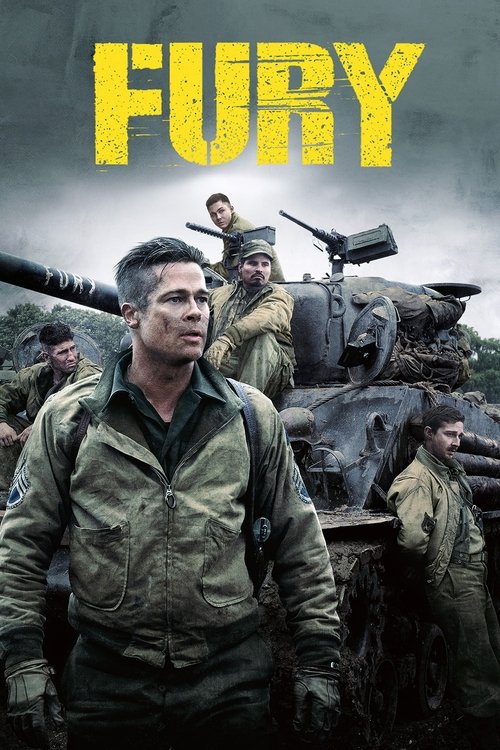
Fury (2014)
Five Men Trapped in a Steel Coffin's Last War
by 10days1movie · Published 2026-09-19
| Type | Movie |
|---|---|
| Director | David Ayer |
| Cast | Brad Pitt, Shia LaBeouf, Logan Lerman, Michael Peña, Jon Bernthal |
| Release | 2014 |
| Genre | War, Drama, Action |
| Runtime | 134min |
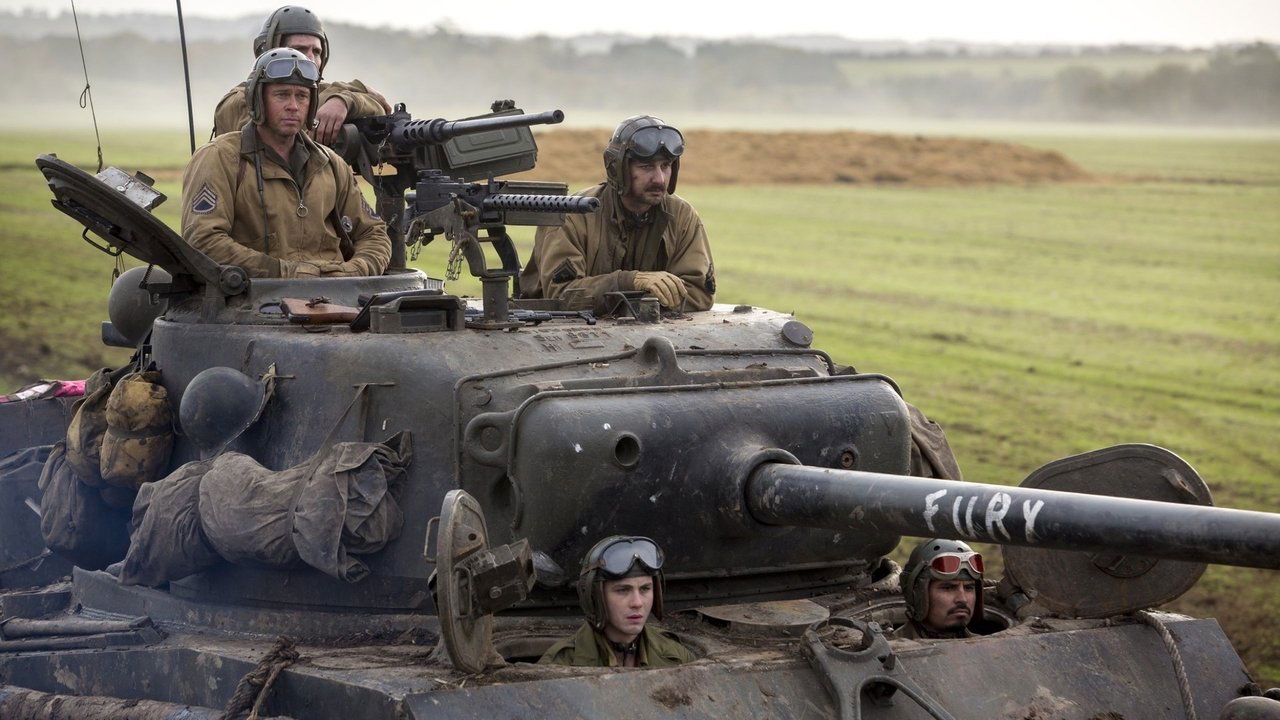
War films usually show off their scale with sweeping aerial views of vast battlefields. Fury takes the opposite route. The camera is almost imprisoned inside a single Sherman tank, a cramped steel box where five men sit shoulder to shoulder. By April 1945 the outcome of the war is already decided, but for the American tank crews pushing into Germany death is still a daily companion. In this final phase, the film relentlessly examines what it means for a person to grow accustomed to killing other people.
What it’s about — How a green recruit becomes a war machine
Tank commander Wardaddy (Brad Pitt) is a seasoned soldier whose creed is bringing his men home alive. His tank, Fury, carries comrades who have shared life and death for years, and when one of them is killed in combat a rookie named Norman (Logan Lerman) is assigned in his place. A former clerk who has never shot a man, Norman has to begin by scrubbing the remains of his predecessor off the tank’s interior. The film follows this greenhorn being broken in as a cog in the war machine. Against the simple, brutal logic that failing to kill the enemy means your comrade dies, the heart of the story lies in what Norman loses and what he comes to accept.
Direction — A steel box that is both shield and coffin
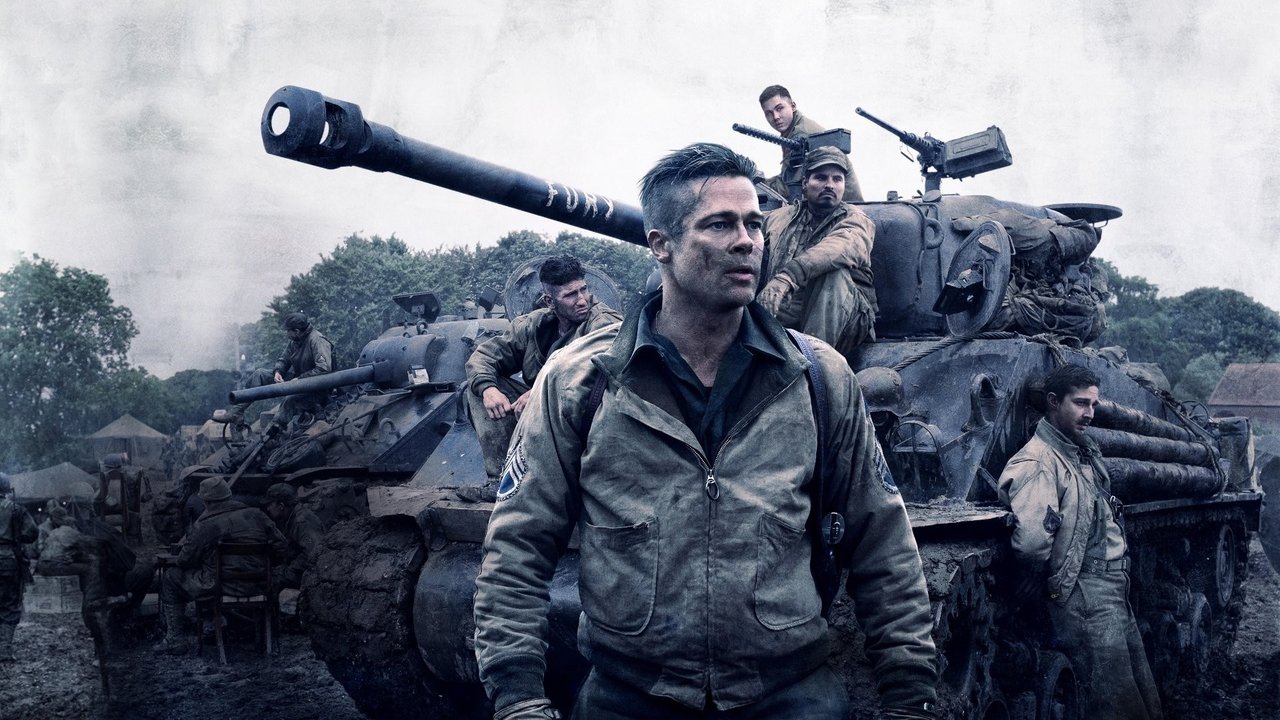
The most striking thing in David Ayer’s direction is his stubborn refusal to glamorize war. The film does not look away from corpses sunk in mud, flesh ground beneath tank treads, or soldiers screaming as they burn. Yet it does not simply put cruelty on display either. By cutting between the claustrophobic interior of the tank and the chaos of the battlefield outside, it continually reminds us that this steel box is at once a shield and a coffin.
The climactic crossroads defense in the latter half compresses the film’s directorial strengths. One broken-down tank holding off hundreds of SS troops may look unrealistic, but Ayer builds desperate tension out of darkness, tracer fire, and the flash of explosions. The heavy impact of a German anti-tank shell grazing the side of the tank makes you feel that armored combat is finally a gamble of life and death waged across thick steel plates. The music is restrained, and the quieter the moment, the heavier the looming weight of violence feels.
Performance — A numbing Norman and a broken Wardaddy
Brad Pitt persuasively renders the contradictions of Wardaddy. He is an unshakable commander in front of his men, but in solitude the fatigue and guilt surface in a single expression. In the scene where he presses Norman to execute an enemy prisoner, just how deeply broken he is becomes fully apparent. Logan Lerman carefully builds the transformation from a terrified recruit into a man who numbs himself to survive. We are inducted into the war through Norman’s eyes, and the subtle change in him after he pulls a trigger for the first time is the emotional core of the film.
The remaining crew, played by Shia LaBeouf, Michael Peña, and Jon Bernthal, never settle into being mere background figures. The long scene of sharing a meal in a German home contains no action at all, yet it shows the fatigue they carry and the lingering remnants of their humanity, becoming the film’s most memorable passage.
What the film says — Ideals are peaceful, history is violent
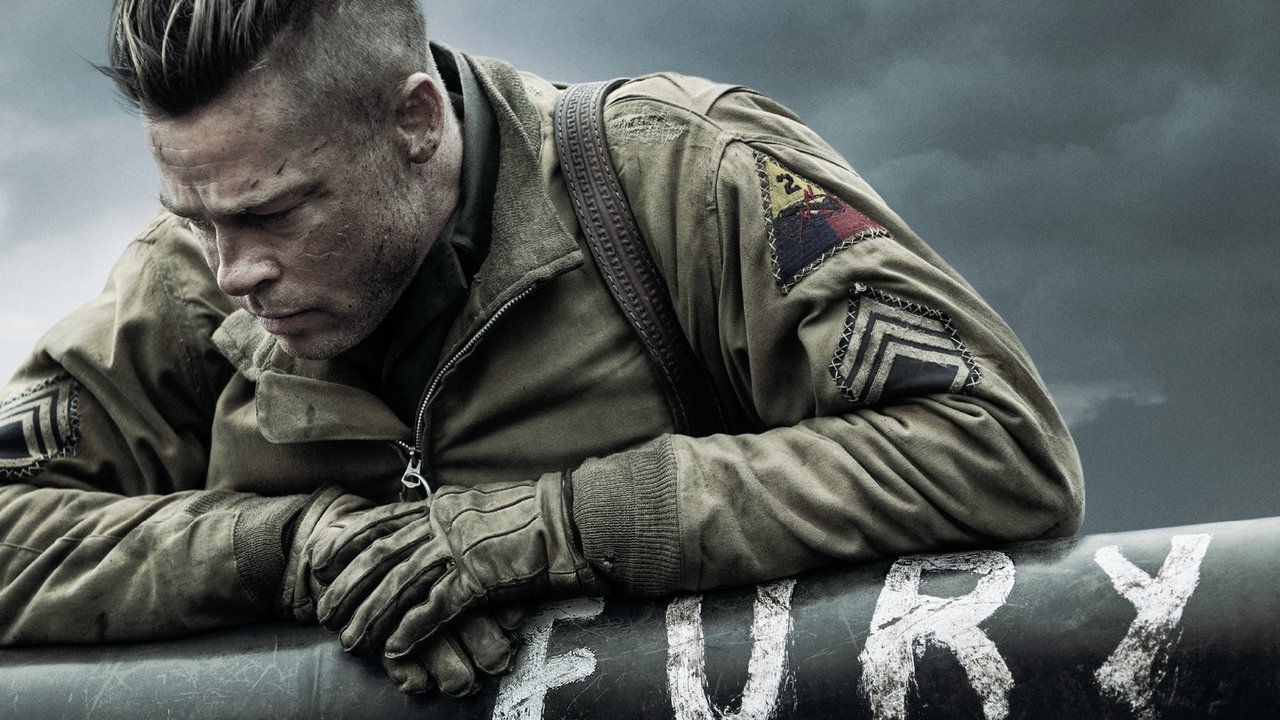
Fury is not a tale of heroism. If anything, it shows how hollow the word hero can be. Wardaddy tells Norman that “ideals are peaceful, history is violent,” and that line runs through the entire film. Even World War II, called a just war, is reduced at the front line to a matter of kill or be killed, and to survive within it a person must surrender a part of himself. The film quietly shows that price through Norman’s transformation and the deaths of his comrades.
Ratings and reception
Critics and audiences alike are broadly favorable. Fury holds a 7.6/10 on IMDb, a stable level of support for a war drama. Its Rotten Tomatoes freshness sits at 75 percent, with critical praise in the majority, and its Metacritic score is a respectable 64 out of 100. Criticism mostly targets the plausibility of the climax and the stock quality of some character portraits, but there is little disagreement about the overwhelming realism of the tank combat and the performances.
Verdict
Fury is a film that strains to hold its balance between the madness of war and the last shred of humanity. A somewhat exaggerated ending and a familiar character lineup remain as flaws, but the dense air inside the steel box and the weighty performances more than cover those weaknesses. With its power to hold your gaze to the end without dressing war up as something glorious, it delivers the satisfaction of ★4.0.
Recommended for
- Viewers seeking a war film focused on inner character rather than scale
- Those who want a vivid depiction of tank warfare
- Fans of Brad Pitt’s restrained acting
Comments