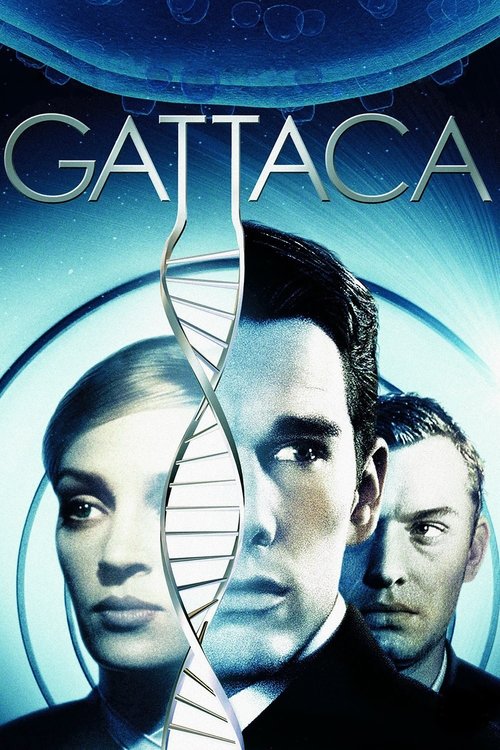
Gattaca (1997)
Defying a World Where Your Genes Decide Your Fate
by 10days1movie · Published 2026-09-20
| Type | Movie |
|---|---|
| Director | Andrew Niccol |
| Cast | Ethan Hawke, Uma Thurman, Jude Law, Alan Arkin, Loren Dean |
| Release | 1997 |
| Genre | Science Fiction, Drama, Thriller |
| Runtime | 107min |
Imagine a society where a single drop of blood at the moment of birth determines the possibilities of your entire life. Gattaca is a film built on that cold premise. Those engineered with superior traits and those conceived naturally, carrying a “defect,” stand in different lines from the very start. There is no fast action and no dazzling future city, yet the film quietly pushes a single question to the very end: can a predetermined fate be overturned by will alone? It was not a commercial success on release, but over time it has been steadily reappraised among sci-fi fans.
What it’s about — An invalid living on borrowed genes
Vincent (Ethan Hawke) was conceived naturally. He grows up having been told of his risk of heart disease and his short life expectancy. He dreams of becoming an astronaut, but with his genetic profile even a janitor’s position is a stretch. Vincent decides to borrow an identity. Using the blood, urine, and hair of Jerome (Jude Law), a superior gene-bearer left paralyzed by an accident, he erases himself anew each day. Having infiltrated the Gattaca aerospace corporation and with a Saturn mission within reach, a murder occurs inside the company and an investigation begins. Amid the danger of his true identity being exposed, Vincent tries to take one more step toward his dream.
Direction — A restrained future drawn in cold order
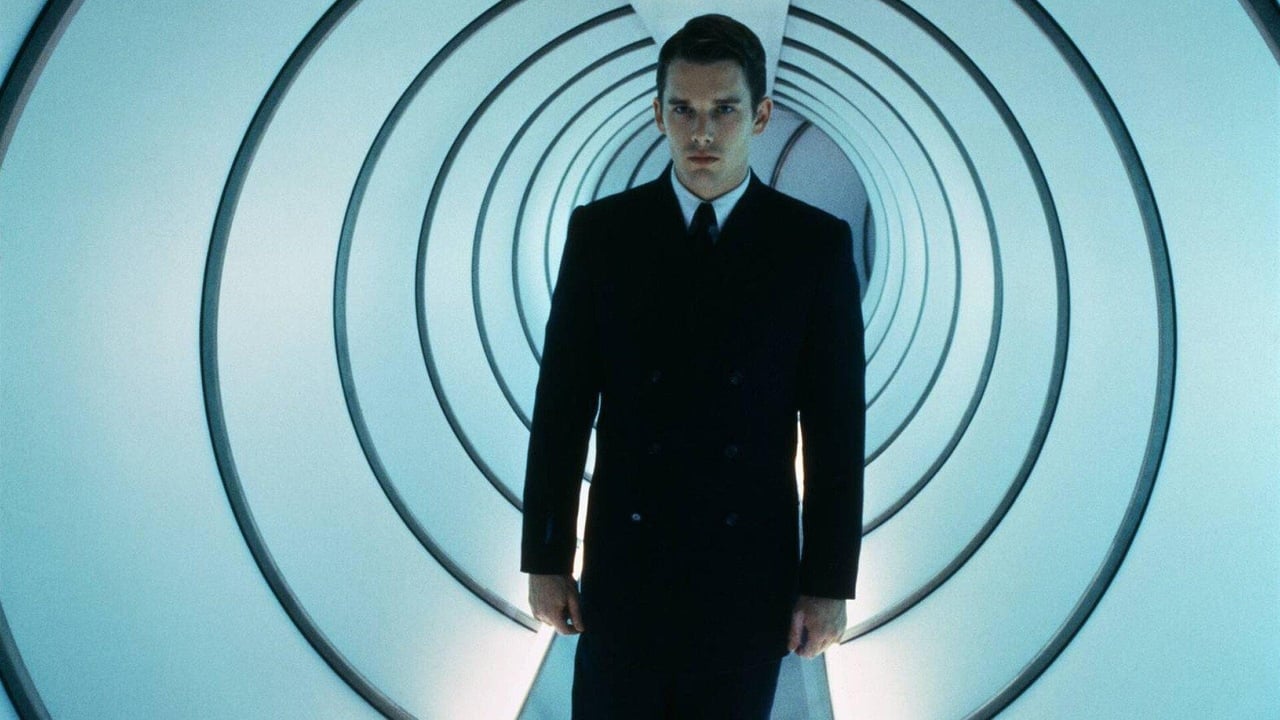
Andrew Niccol’s direction deserves to be called an aesthetic of restraint. Even while depicting the future, he chooses architecture and costumes with a 1950s mood, and sleek, curved spaces, instead of flashy technology. As a result the imagery is sophisticated yet somehow chilly. This cold orderliness itself speaks the film’s theme: it conveys, through art direction and color alone, just how inhuman a perfectly controlled world really is.
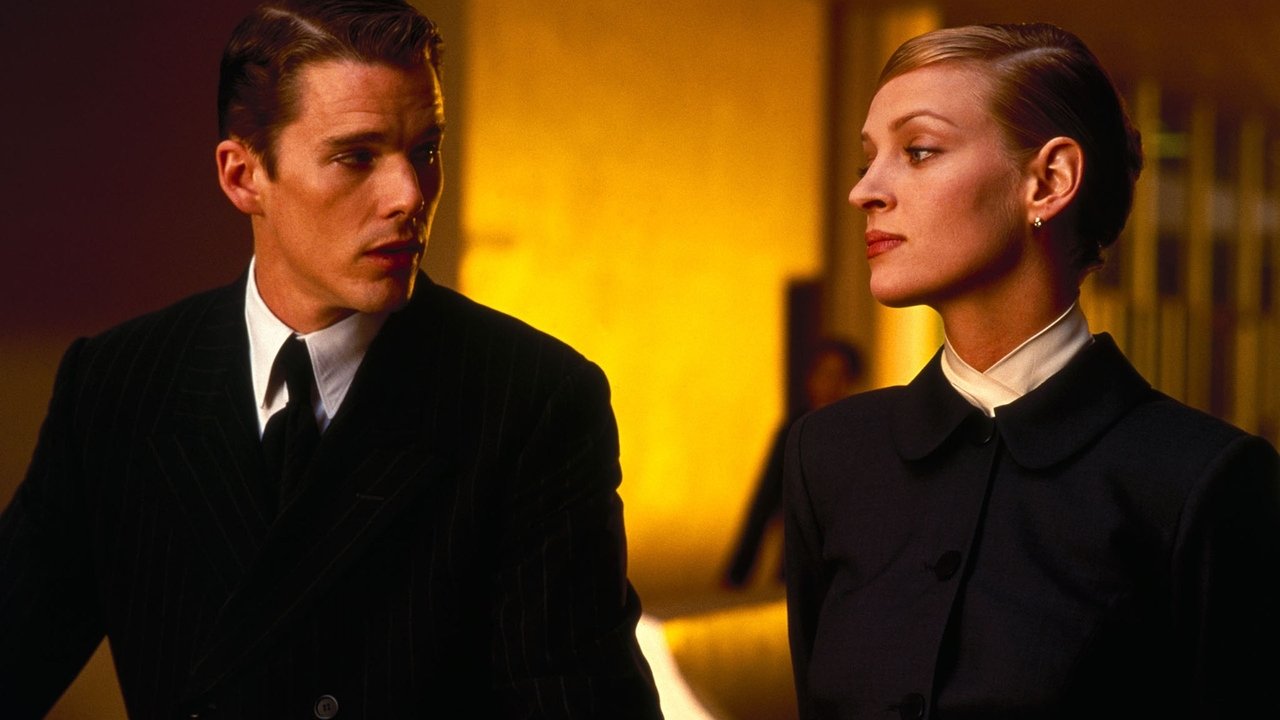
Niccol invests his time in his characters’ inner lives rather than rapid plotting. The scenes of Vincent scraping off dead skin every morning and strapping on pouches of fake blood, through repetition, drive home how grueling his struggle is. The contrast between the yellow-tinged indoor lighting and the blue of dawn, and the slow flow of Michael Nyman’s score, lend the film a heavy, tragic feeling. Because it builds tension through atmosphere rather than spectacular events, it is worth noting that some viewers may find it slow.
Performance — Flawed Vincent against once-perfect Jerome
Ethan Hawke conveys Vincent’s desperation without exaggeration. The fatigue of a man who lives in constant fear of being found out coexists on one face with the resolve of someone who still refuses to abandon his dream. Jude Law makes a strong impression as Jerome, a man living with his pride in ruins. His cynicism, the bitterness of someone who despaired despite having perfect genes, forms a sharp contrast with Vincent, who moves forward in spite of his flaws. Uma Thurman plays the colleague Irene as composed yet wavering, adding texture to the emotion that blooms within this controlled world. The restrained chemistry of the three actors sustains this quiet film to the end.
What the film says — A will that cannot be reduced to data
The core of Gattaca is a rebuttal of genetic determinism. The film shows how dangerous the belief is that data can fully explain a person. The swimming contest between Vincent and his brother distills this theme. He swims to the end without saving any strength to return. The declaration is that the difference is made not by measurable ability but by a will that does not calculate its limits. In an age where genetic testing and data classification have become routine, this message lands even more sharply than it did in 1997.
Ratings and reception
Gattaca holds a 7.7/10 on IMDb, a representative example of a film whose reputation has risen over time rather than at release. Its Rotten Tomatoes freshness is 82% and its Metacritic score is 64 out of 100. Critics highly valued its choice to strip away flash and concentrate on idea and emotion, and its minimalist future design and music have been consistently praised. The box office fell short of expectations, but it is now frequently cited as a model of “thinking-person’s sci-fi.”

Verdict
Gattaca is a film that is powerful without being loud. It borrows the future only to end up speaking of human will and dignity. The density of incident is low, so the pacing may feel slow, but that very negative space makes the theme clearer. Science fiction that captures one person’s struggle not to surrender to predetermined conditions this gracefully is rare. It is a work well worth its ★4.0, one you chew over for a long time.
Recommended for
- Those who prefer sci-fi that wins on ideas and atmosphere rather than action
- Those who want to dwell on themes of genes, fate, and free will
- Those who want to savor a chilly vision of the future built from restrained design and music
Comments