
Django Unchained (2012)
Rewriting Revenge in the Language of the Western
by 10days1movie · Published 2026-09-16
| Type | Movie |
|---|---|
| Director | Quentin Tarantino |
| Cast | Jamie Foxx, Christoph Waltz, Leonardo DiCaprio, Kerry Washington, Samuel L. Jackson, Walton Goggins |
| Release | 2012 |
| Genre | Drama, Western |
| Runtime | 165min |
A single slave climbs onto a horse and aims his barrel at a world that bought and sold him. Starting from this one simple image, Quentin Tarantino drags the era of slavery, which America long shied away from confronting head-on, into the Western, the most American of genres. The result is a strange film, cathartic yet uncomfortable, stylized yet relentlessly evoking reality. My rating is ★4.0.
What it’s about — A Western dragged into the era of slavery
The American South just before the Civil War. Schultz (Christoph Waltz), a dentist-turned-bounty-hunter, buys the slave Django (Jamie Foxx), who knows the faces of his targets, promises him freedom, and proposes they travel together. The two become strange companions as they chase bounties, and Django sets out to find his wife Broomhilda (Kerry Washington), sold off and separated from him by a slave trader. The place she is held is Candyland, the estate of the great plantation owner Calvin Candie (Leonardo DiCaprio). The film takes the shape of a rescue tale, but within it the cruelty of a system that treats human beings as merchandise never blurs for a moment.
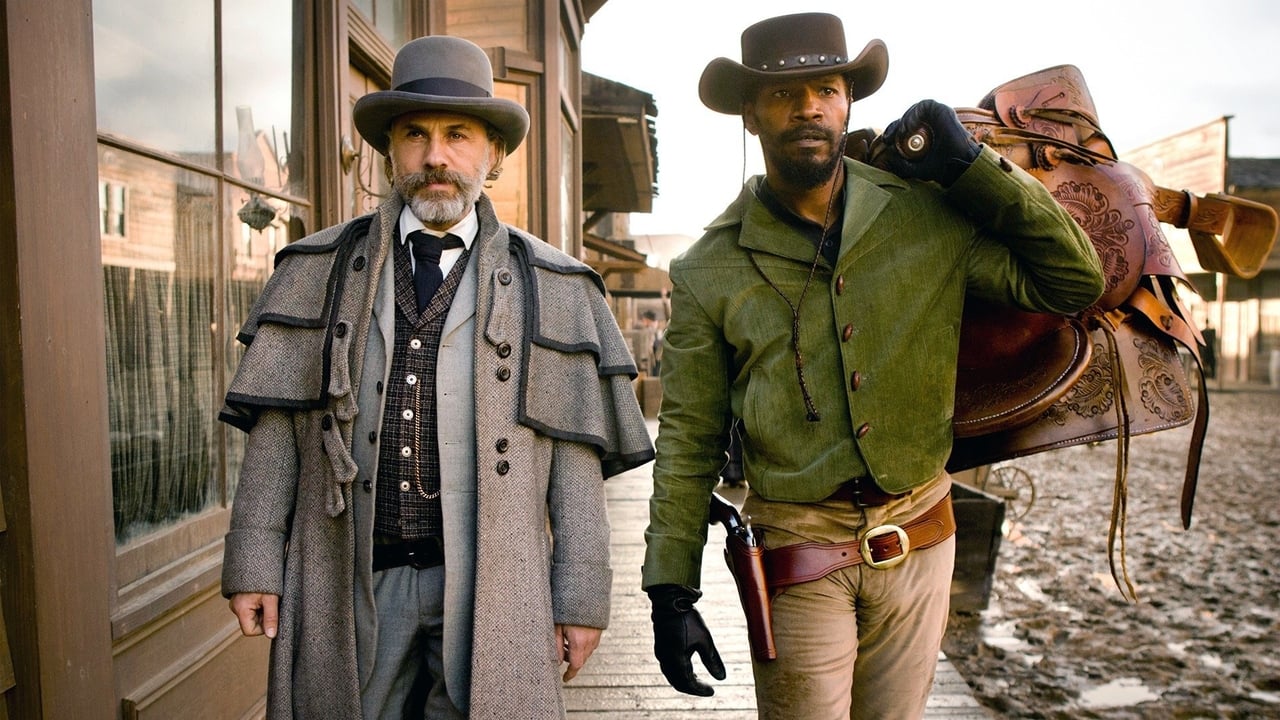
Direction — Violence whose direction divides perpetrator from victim
Tarantino’s direction keeps one foot in the old Westerns and the spaghetti Western, the other in a modern self-awareness. The exaggerated gunfire that suddenly erupts and the fountains of blood that pour out are clearly direction aiming for genre pleasure, but the director cleverly modulates the direction of that violence. Violence toward perpetrators is cartoonishly hearty; violence the victims suffer is gazed upon coldly and at length. So the audience laughs and then soon falls silent.
The density of the dialogue is also a strength characteristic of this director. The characters trade long, roundabout conversations right up until the decisive moment, raising the tension to its peak. As in the dinner scene at Candyland, the direction in which polite words pass over the table while a knife-edge threat flows beneath it is the most striking passage in this film. That said, the long runtime, reaching 165 minutes, gives a somewhat sagging impression in the back half.
Performance — Waltz’s wit and Jackson’s chilling Stephen
Christoph Waltz grants the figure of Schultz wit, dignity, and a firm moral weight all at once. The resolve hidden behind his sly eloquence commands every scene. Jamie Foxx persuasively renders Django’s change, beginning from silence and gradually finding his own anger and agency. Leonardo DiCaprio widened his acting range a step through Candie, who hides cruelty inside elegant manners, and Stephen, the loyal slave played by Samuel L. Jackson, is the figure who most chillingly shows how the system warps a human being.
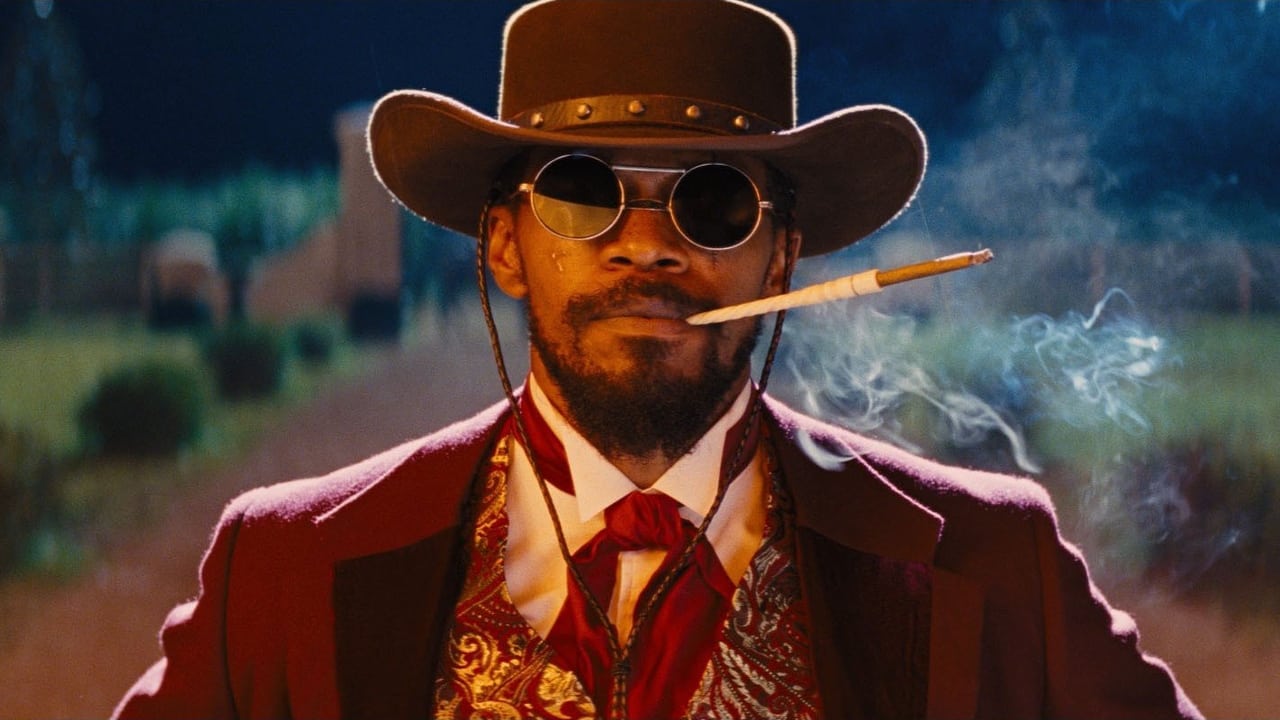
What the film says — A revenge history never allowed
Rather than honestly re-creating history, this film realizes in the realm of imagination the revenge that history ultimately never allowed. In that sense Django’s barrel is not simple entertainment but a kind of reply. The image of the abused man climbing onto a horse himself and tearing down the world that crushed him stands in a clearly different place from the established way of genteelly mourning slavery. At the same time, Tarantino keeps leaving the reality of the suffering on screen, so that the catharsis never becomes too smooth.
Ratings & reception
The IMDb rating is 8.5 out of 10, high even among Tarantino’s signature works. The Rotten Tomatoes Tomatometer is 87 percent and the Metacritic score is 81 out of 100, with thick critical support as well. Christoph Waltz won the Academy and Golden Globe Awards for Best Supporting Actor for this work, and Tarantino won for Best Original Screenplay. There was no shortage of debate over the level of violence and the depiction of race, but as an attempt to break through a heavy subject head-on under the shell of a genre film, it is generally highly regarded.
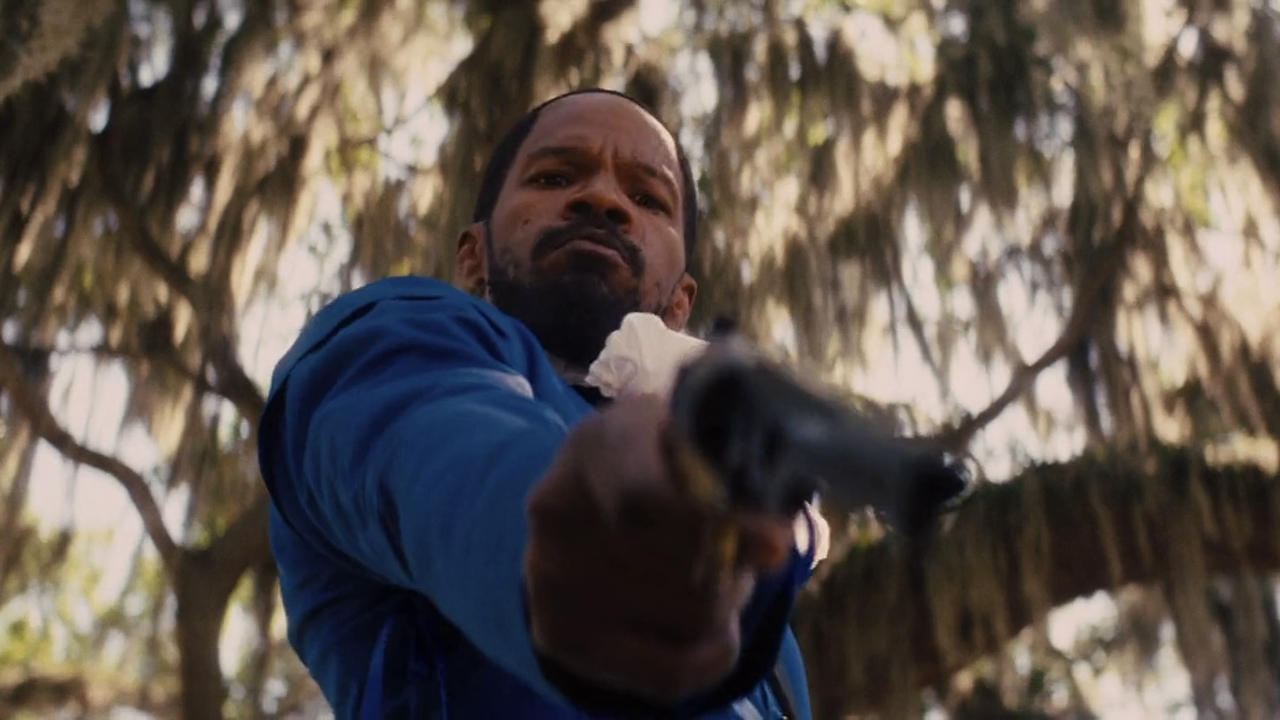
Verdict
Django Unchained is an ambitious work that crams two easily clashing elements, the pleasure of entertainment and historical weight, into a single frame. Long and rough as it is, flaws show, but once you watch it to the end an aftertaste remains that cannot be tidied into a simple revenge story. It is a film that borrows the grammar of the genre and ultimately says what it wants to say, and so it is worth four stars.
Recommended for
- Those who enjoy Tarantino’s characteristic dialogue and stylized violence
- Anyone who wants to meet a weighty subject within the form of a Western
- Those who want to see the dense acting duel of Waltz and DiCaprio
Comments